August 2025: The Smith Lab's Team Platypus, has just published a new study, impeccably and professionally led by Charley Rayner.
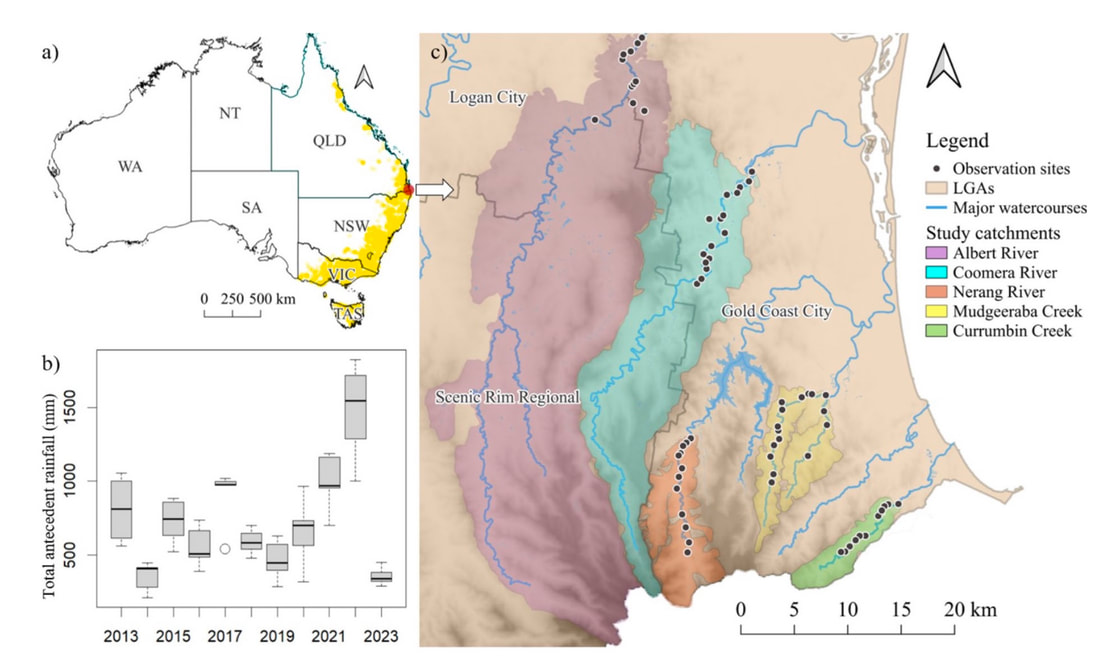
Leveraging citizen science data (477 annual platypus observations, 67 sites across five catchments, 2013–2023) and satellite imagery, Charley quantified the decade-long impact of urbanisation on platypus, using Normalised Difference Vegetation Index (NDVI), Normalised Difference Built-up Index (NDBI), and urban land cover.
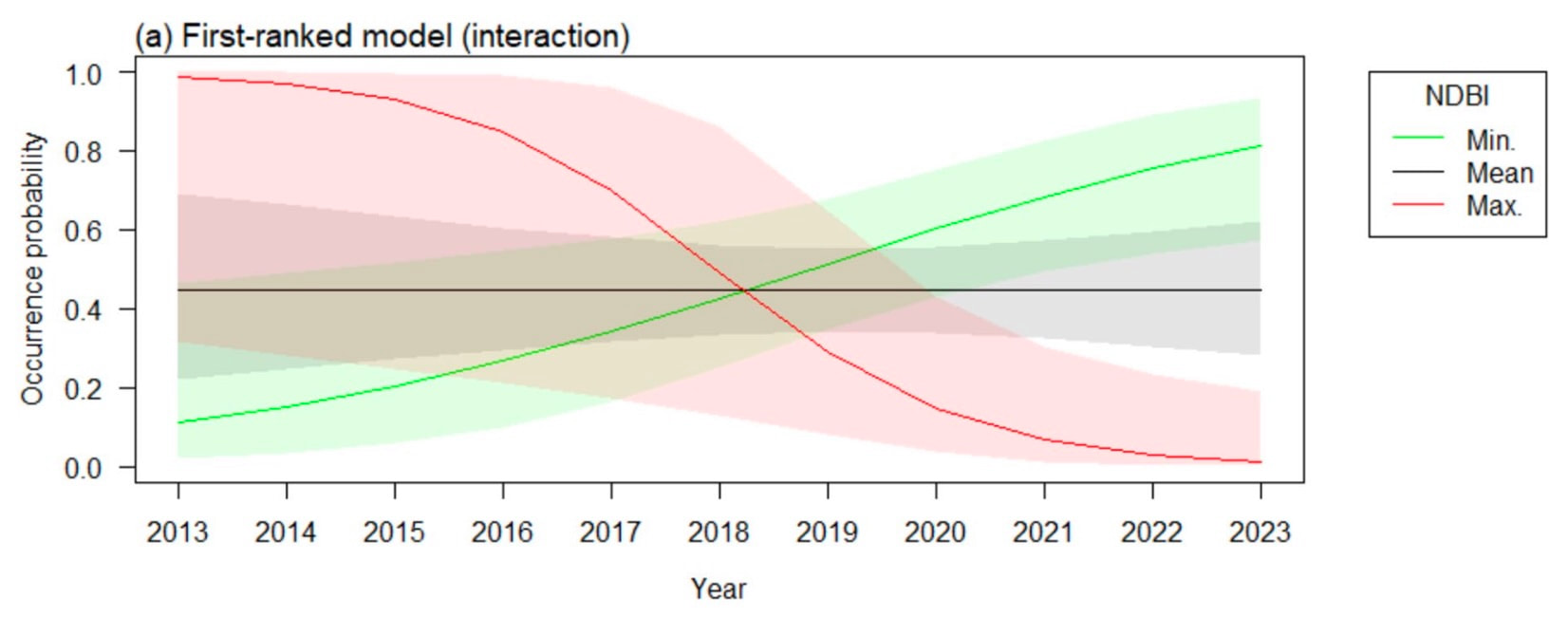
Urbanisation negatively impacted platypus, with the strongest effect observed for the Built-up Index. These findings occurred despite minimal variation to the catchment landscape over the 11-year study, indicating platypus response was due to prolonged urban exposure rather than direct land-use change.
Charley's results have led to new recommendations for freshwater management and platypus conservation including riparian buffer protection (> 30 m) and water-sensitive urban design.
This paper arose from Charley's honours research. Their paper was described by one reviewer as an 'interesting blend of effective citizen science with professional landscape ecology and strong spatio-temporal elements.' Well done Charley!
Leveraging citizen science data (477 annual platypus observations, 67 sites across five catchments, 2013–2023) and satellite imagery, Charley quantified the decade-long impact of urbanisation on platypus, using Normalised Difference Vegetation Index (NDVI), Normalised Difference Built-up Index (NDBI), and urban land cover.
Urbanisation negatively impacted platypus, with the strongest effect observed for the Built-up Index. These findings occurred despite minimal variation to the catchment landscape over the 11-year study, indicating platypus response was due to prolonged urban exposure rather than direct land-use change.
Charley's results have led to new recommendations for freshwater management and platypus conservation including riparian buffer protection (> 30 m) and water-sensitive urban design.
This paper arose from Charley's honours research. Their paper was described by one reviewer as an 'interesting blend of effective citizen science with professional landscape ecology and strong spatio-temporal elements.' Well done Charley!
Rayner CJ, Brunt T, Smith AL (2025). The impact of a decade of urbanisation on a semi-aquatic mammal in a subtropical freshwater ecosystem. Landscape Ecology 40, 175